Procurement teams have long been tasked with securing the best value for their organisations, balancing cost, quality, and delivery. But in today’s world, there’s a new priority reshaping the landscape: carbon reduction. As businesses face increasing pressure to meet sustainability goals, procurement teams are uniquely positioned to drive meaningful change. Tackling carbon emissions isn’t just a job for sustainability teams, it’s a cross-functional effort, and procurement holds the keys to a significant part of the solution.
Scope 3 Emissions and the Supply Chain
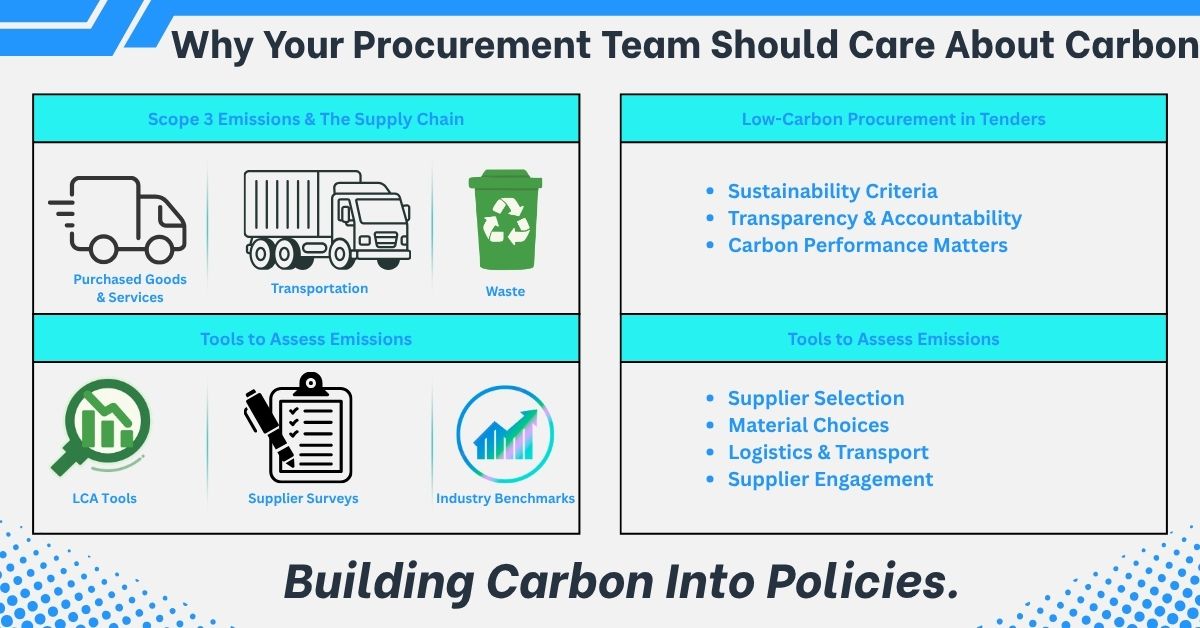
When it comes to carbon emissions, Scope 3 is where things get complicated and are where procurement plays a pivotal role. Scope 3 emissions are indirect emissions that occur across a company’s value chain, including those from purchased goods and services, transportation, and waste. For many organisations, these emissions account for the majority of their carbon footprint.
The supply chain is often the largest contributor to Scope 3 emissions. Every product sourced, material chosen, and supplier engaged has an impact. Procurement teams, therefore, are at the forefront of reducing these emissions. By making informed decisions about suppliers and materials, procurement can significantly influence an organisation’s overall carbon footprint.
The Growing Importance of Low-Carbon Procurement in Tenders
Low-carbon procurement is no longer a “nice-to-have” feature in tenders, it’s becoming a necessity. Governments, investors, and consumers are demanding greater transparency and accountability from businesses. Many organisations now include sustainability criteria in their tender processes, requiring suppliers to demonstrate their commitment to reducing emissions.
For procurement teams, this shift means rethinking how suppliers are evaluated. Price and quality remain critical, but carbon performance is increasingly a deciding factor. Low-carbon procurement not only helps meet sustainability goals but also strengthens relationships with forward-thinking suppliers who share your values. It’s a win-win for both the planet and your organisation’s reputation.
Tools to Assess Supplier Emissions and Material Choices
To make informed decisions, procurement teams need the right tools to assess supplier emissions and material choices. Fortunately, there are several resources available to help:
- Life Cycle Assessment (LCA) Tools: These tools evaluate the environmental impact of materials and products throughout their lifecycle, helping teams choose low-carbon alternatives.
- Supplier Questionnaires: Custom questionnaires can gather data on supplier emissions, energy use, and sustainability initiatives.
- Industry Benchmarks: Comparing suppliers against industry standards can highlight leaders in low-carbon practices.
By leveraging these tools, procurement teams can identify opportunities to reduce emissions and make data-driven decisions that align with sustainability goals.
What Procurement Can Influence (More Than You Think)
Procurement’s influence extends far beyond signing contracts. Here are some key areas where procurement can drive carbon reduction:
- Supplier Selection: Choosing suppliers with strong sustainability credentials can significantly lower Scope 3 emissions.
- Material Choices: Opting for recycled or renewable materials reduces the carbon footprint of products and services.
- Logistics and Transportation: Collaborating with suppliers to optimise shipping routes and use low-emission transport options can cut emissions.
- Supplier Engagement: Working closely with suppliers to set carbon reduction targets and share best practices fosters a culture of sustainability.
- Innovation: Encouraging suppliers to develop low-carbon solutions can lead to breakthroughs that benefit the entire industry.
Procurement teams have more power than they realise to shape their organisation’s carbon impact. By taking a proactive approach, they can lead the charge toward a more sustainable future.
Building Carbon Into Purchasing Policies
To embed sustainability into procurement processes, organisations must build carbon considerations into their purchasing policies. Here’s how:
- Set Clear Goals: Define specific carbon reduction targets for procurement activities, aligned with broader organisational goals.
- Develop Criteria: Include carbon performance as a key evaluation criterion in tenders and supplier assessments.
- Train Teams: Equip procurement professionals with the knowledge and skills needed to assess carbon impacts and engage suppliers on sustainability.
- Monitor Progress: Track emissions reductions over time and adjust strategies as needed to stay on track.
- Collaborate Across Departments: Work with finance, sustainability, and operations teams to ensure alignment and maximise impact.
By formalising carbon reduction in purchasing policies, organisations can create a consistent framework for sustainable procurement and drive long-term change.
Empowering Procurement to Drive Change
Reducing carbon emissions is a shared responsibility, but procurement teams have a unique opportunity to lead the way. By understanding their role in tackling Scope 3 emissions, embracing low-carbon procurement, and leveraging the right tools, procurement professionals can make a significant impact. Building carbon considerations into purchasing policies ensures that sustainability becomes a core part of decision-making, not an afterthought.
The message is clear: carbon reduction isn’t just the sustainability team’s job. Procurement has real power to shape an organisation’s environmental impact. By stepping up to the challenge, procurement teams can help their organisations achieve their sustainability goals while driving innovation and building stronger supplier relationships. The time to act is now.