In today’s data-driven world, facilities, operations, and sustainability managers have access to more information than ever before. Energy usage, equipment performance, emissions levels are all just a click away. But here’s the catch: collecting data isn’t enough. Without action, data is just noise. Real savings and meaningful change happen when insights are turned into action. Let’s explore why monitoring alone falls short and how effective management bridges the gap.
The Trap of “Data-Rich, Insight-Poor”
It’s easy to fall into the trap of being “data-rich, insight-poor.” Many organisations invest heavily in monitoring systems, only to find themselves overwhelmed by a flood of information. Dashboards light up with metrics, but decision-makers are left asking, “What do we do with this?”
The problem isn’t the lack of data. It’s the lack of actionable insights. Data without context or analysis doesn’t drive decisions. For example, knowing that energy usage spiked last month is helpful, but understanding why it spiked and how to prevent it from happening again is what truly matters.
What Separates Good Monitoring from Effective Management
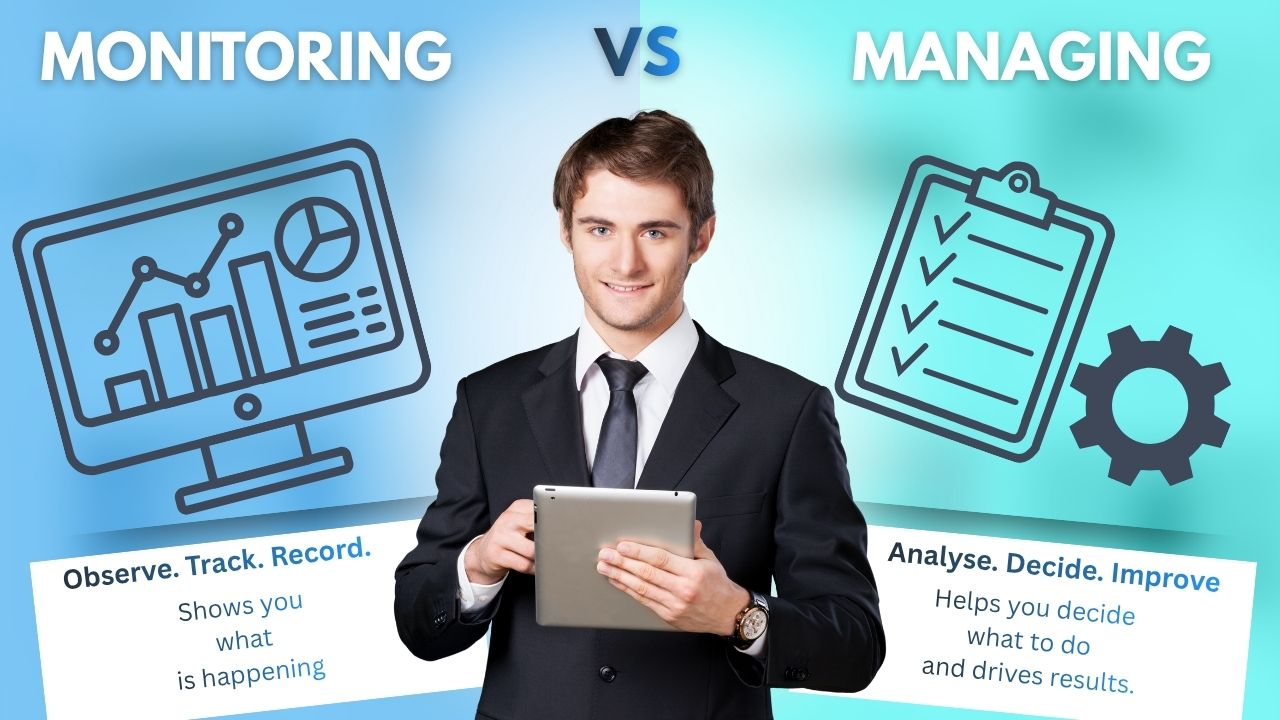
The difference between monitoring and managing lies in purpose and execution. Monitoring is about observing, tracking and recording data. Management, on the other hand, is about taking that data and using it to drive decisions, optimise performance, and achieve goals.
Good monitoring systems provide the raw information. But effective management builds on this by:
- Identifying trends: Spotting patterns in the data to predict future issues or opportunities.
- Setting benchmarks: Comparing performance against industry standards or internal goals.
- Prioritising actions: Focusing on the most impactful areas for improvement.
- Measuring outcomes: Tracking the results of interventions to ensure they deliver value.
The shift from monitoring to managing requires a proactive mindset. It’s not enough to know what’s happening. You need to decide what to do about it.
Turning Insights into Action: Alerts, Controls, Follow-Through
Actionable insights are the bridge between data and results. But how do you turn insights into action? Here’s a three-step approach:
- Alerts: Automated alerts are a critical first step. They notify you when something goes wrong. For example, when an equipment failure or an energy usage spike. Alerts ensure you can respond quickly to issues before they escalate.
- Controls: Beyond alerts, effective management involves implementing controls. For instance, if a building’s HVAC system is running inefficiently, controls can adjust settings automatically to optimise performance.
- Follow-Through: Finally, follow-through is essential. This means ensuring that corrective actions are taken, documented, and reviewed. It’s not enough to fix a problem once; you need to understand the root cause and prevent it from recurring.
The key is to create systems that don’t just react to problems but actively prevent them. This requires a combination of technology, processes, and people working together
The Importance of Accountability Structures (EMS/EnMS)
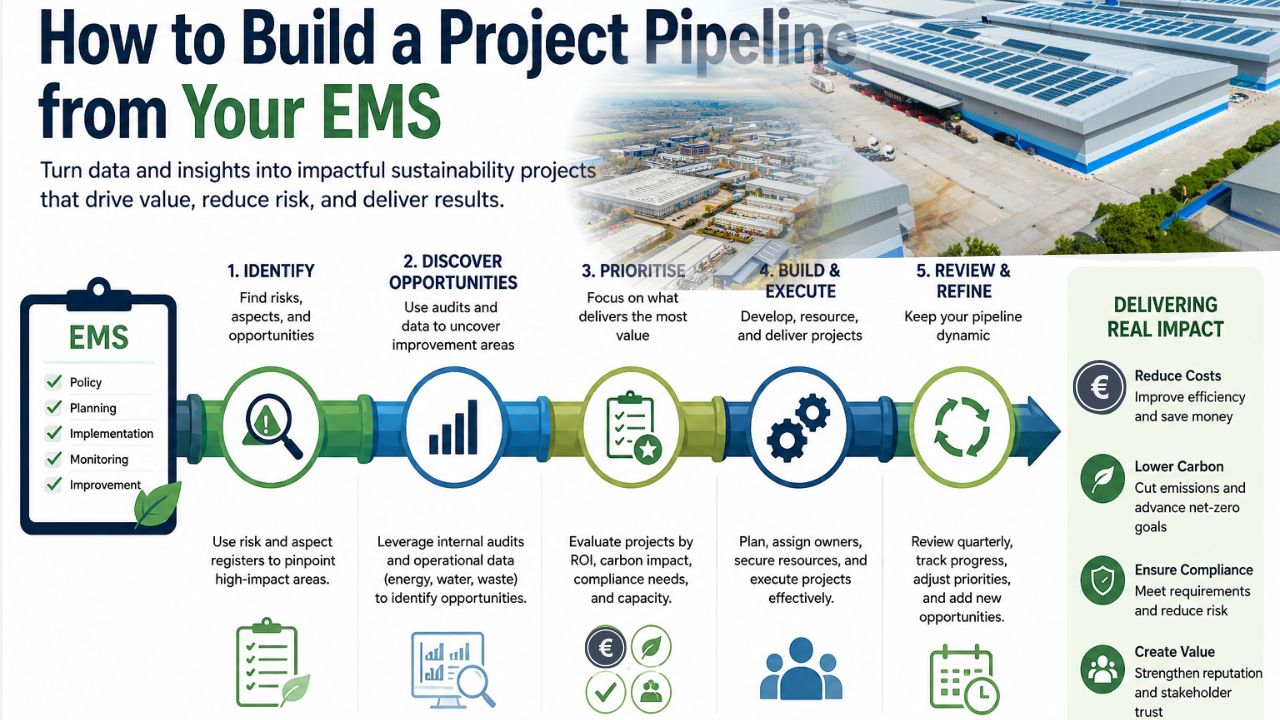
Accountability is the backbone of effective management. Without clear roles, responsibilities, and processes, even the best data and insights can go to waste. This is where Environmental Management Systems (EMS) or Energy Management Systems (EnMS) come into play.
These frameworks provide a structured approach to managing environmental and energy performance. They establish:
- Defined roles: Who is responsible for monitoring, analysing, and acting on data?
- Standardised processes: How should data be collected, analysed, and reported?
- Continuous improvement: How will performance be reviewed and improved over time?
By embedding accountability into your operations, you ensure that insights lead to action, which leads to results.
Setting Up a Closed Loop Between Data and Decision-Making
To maximise the value of your data, you need a closed-loop system that connects monitoring, analysis, action, and feedback. Here’s how it works:
- Monitor: Collect data in real-time using sensors, meters, and other monitoring tools.
- Analyse: Use software or analytics tools to identify trends, anomalies, and opportunities.
- Act: Implement changes based on the insights, whether it’s adjusting equipment settings, scheduling maintenance, or launching energy-saving initiatives.
- Review: Measure the impact of your actions and feed the results back into the system to refine future decisions.
This closed-loop approach ensures that data isn’t just collected, it’s continuously used to drive improvement. Over time, this creates a culture of data-driven decision-making that delivers measurable results.
Conclusion: From Data to Results
Data is powerful, but it’s only the starting point. To unlock its full potential, you need to move beyond monitoring and embrace effective management. This means turning data into insights, insights into actions, and actions into measurable results.
For facilities, operations, and sustainability managers, the message is clear: collecting data isn’t enough. The real value lies in what you do with it. By setting up accountability structures, leveraging actionable insights, and creating a closed-loop system, you can drive real savings and meaningful change.