
Why Internal Engagement Is the Secret to Energy Efficiency Success
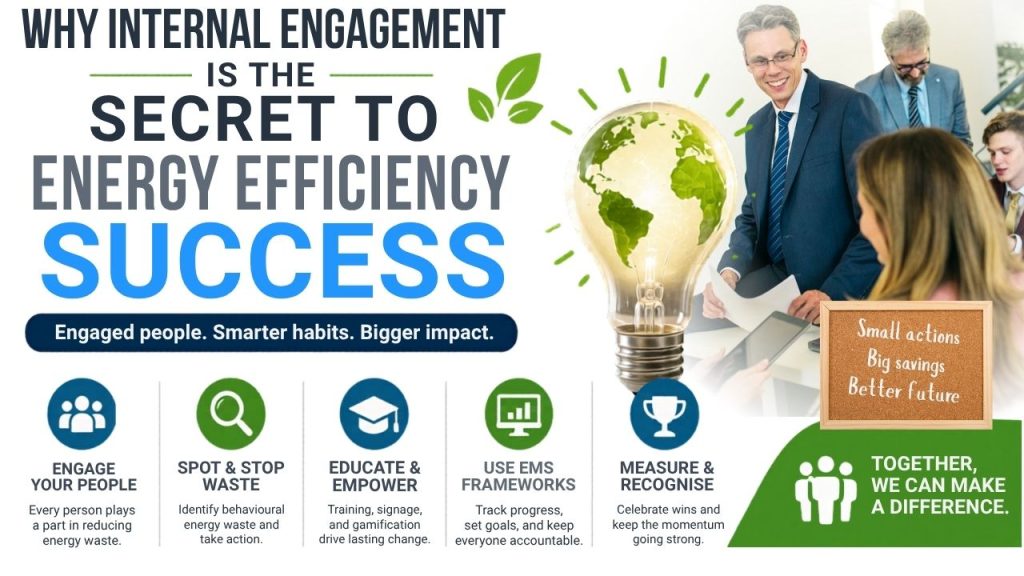
Internal engagement is often the missing link in successful energy efficiency programs. While smart meters and efficient equipment matter, lasting results come from changing everyday behaviours, like switching off lights, powering down computers, and avoiding heating or cooling empty spaces. Spotting this “behavioural energy waste” takes observation, feedback, and a culture where employees feel responsible and empowered. Real progress also depends on buy-in across operations, admin, and leadership, supported by clear communication and visible results. Training, simple signage, and gamified competitions can keep momentum high, while EMS frameworks help track performance and celebrate measurable wins.
Monitoring vs. Managing: Why Data Alone Isn’t Enough
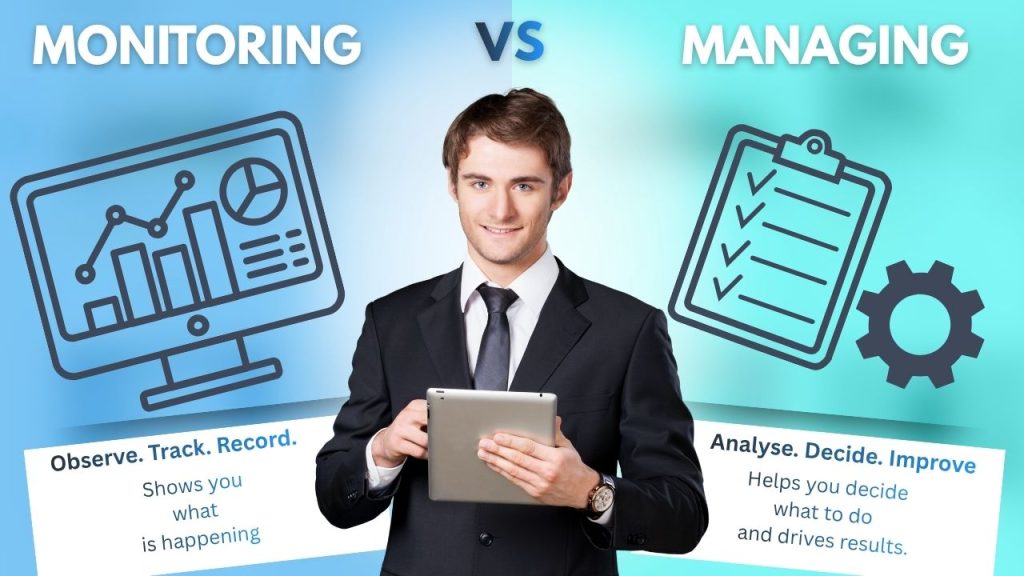
Facilities, operations, and sustainability teams now have more performance data than ever, but data alone does not deliver savings or change. Monitoring tells you what is happening; managing turns information into decisions that optimise outcomes. The real challenge is being “data-rich, insight-poor,” where dashboards show spikes and anomalies without explaining the cause or the next step. Effective management connects trends, benchmarks, and prioritised actions with practical execution through alerts, automated controls, and consistent follow-through. With clear accountability structures like EMS or EnMS and a closed-loop process of monitor, analyse, act, and review, organizations can move from reporting metrics to achieving measurable results.
Low-Cost Actions That Deliver Real Energy Savings
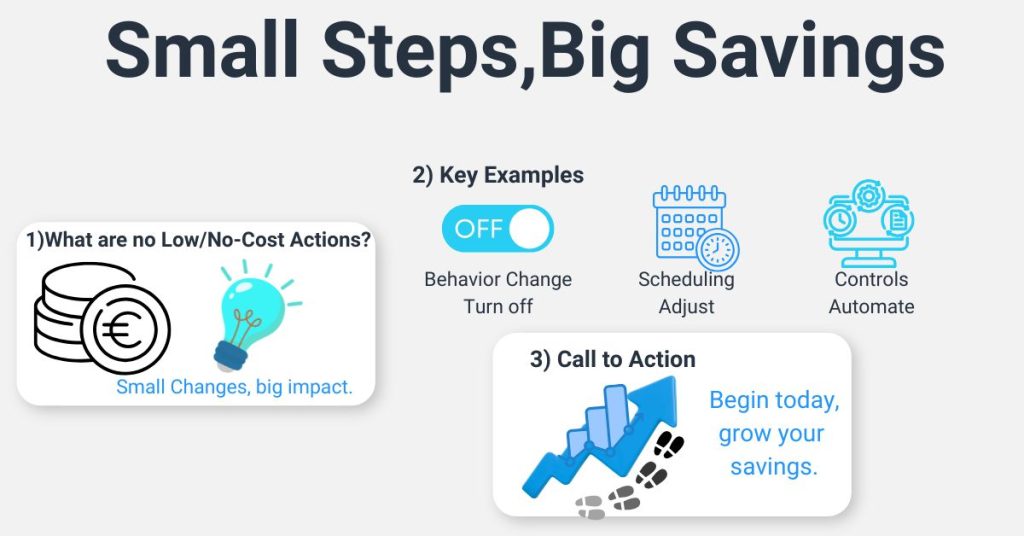
Achieving energy efficiency doesn’t require a hefty investment—small, low-cost actions can deliver real savings and build momentum for bigger changes. This blog highlights practical, no-cost or low-cost measures such as behavior change, scheduling adjustments, optimising controls, and fine-tuning setpoints. These quick wins are easy to implement and offer immediate results, helping you demonstrate value, engage your team, and lay the groundwork for future upgrades. By embedding these actions into your Energy Management System and celebrating early successes, you can create a culture of efficiency and scale up your efforts for lasting impact. Start small, prove value, then scale.
Submetering Systems: An Effective Way to Promote Sustainability Through Resource Management.
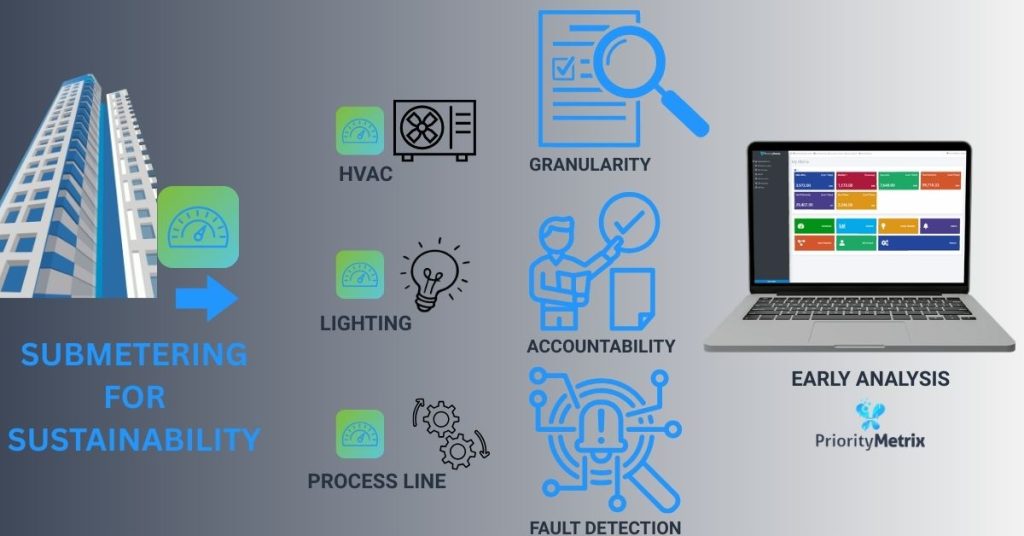
Submetering systems are transforming the way organisations manage energy and promote sustainability. By installing submeters on key systems like HVAC, lighting, and process lines, businesses gain detailed insights into exactly where energy is being used—and wasted. This granular data enables teams to identify inefficiencies, assign accountability, and detect faults early, leading to smarter decisions and cost savings. With the help of user-friendly analytics software, submetering turns complex energy data into actionable insights. Embracing submetering is a practical step toward reducing energy waste, optimising operations, and achieving sustainability goals in any facility.
EPDs in Public Procurement: Why You’ll Need One Sooner Than You Think
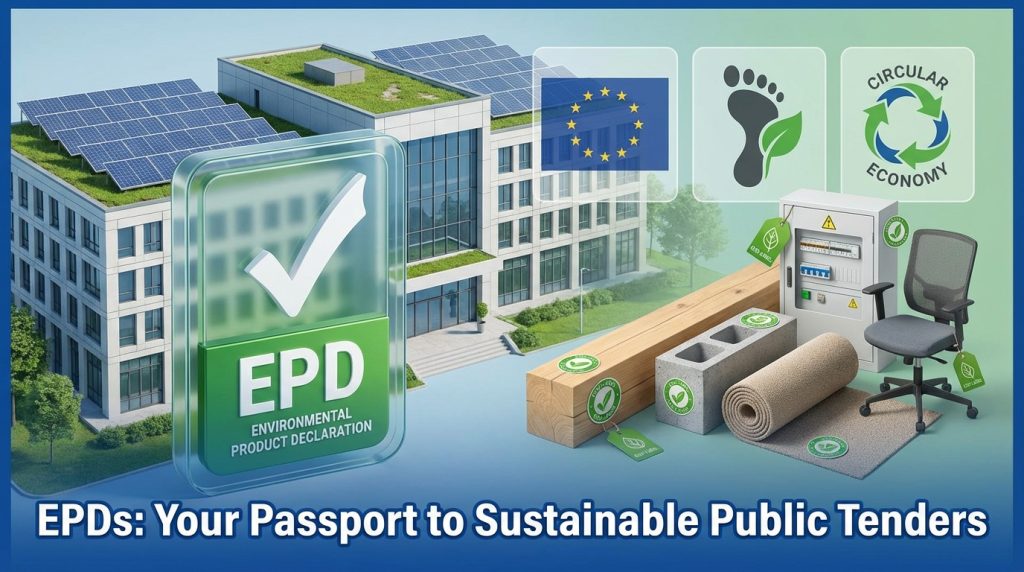
Environmental Product Declarations (EPDs) are becoming essential in public procurement, especially in construction and manufacturing. As sustainability standards rise, EPDs provide transparent, third-party-verified data on a product’s environmental impact, helping buyers meet climate and circularity goals. Increasingly required in EU Green Public Procurement, EPDs enable fair comparisons and support compliance with standards like ISO 14025 and EN 15804. Manufacturers and suppliers who invest in EPDs now will gain a competitive edge, as these documents are quickly shifting from a “nice-to-have” to a necessity for winning tenders and demonstrating leadership in sustainable procurement.
The Carbon Cost of Compressed Air (and How to Cut It)
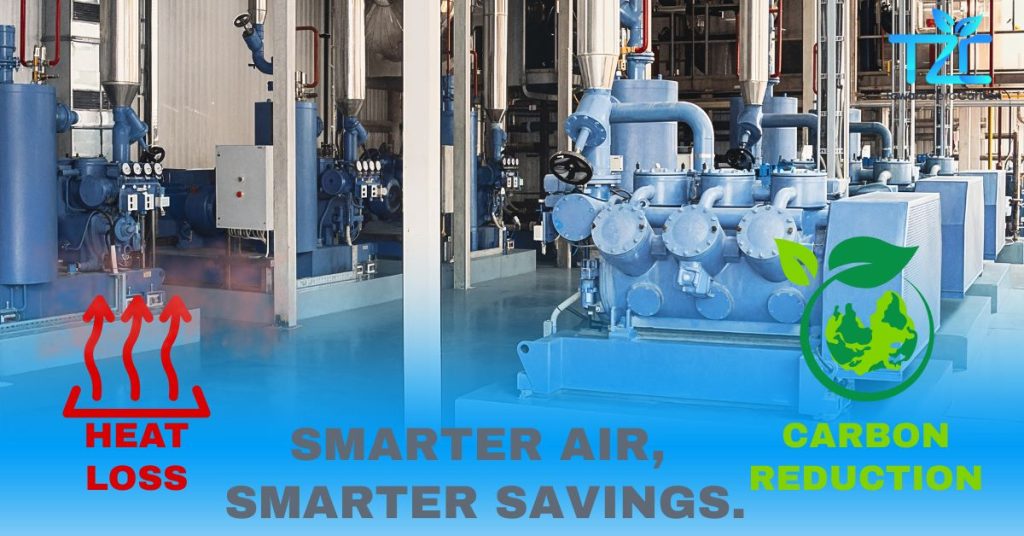
Compressed air is a vital utility in industrial operations, but it’s often highly inefficient—up to 90% of input energy can be lost as heat. Common issues like leaks, poor pressure control, and outdated equipment drive up energy costs and carbon emissions. By conducting regular leak audits, monitoring system performance, and implementing preventive maintenance, facilities can quickly identify and address waste. Investing in upgrades such as variable speed drive compressors, energy-efficient dryers, smart controls, and heat recovery systems delivers fast ROI and significant carbon savings. Prioritising compressed air efficiency is a practical, cost-effective way to cut costs and support sustainability goals.
How to Use ISO 50001 to Secure Energy Grants and Funding

ISO 50001 is more than just an energy management certification—it’s a strategic tool for unlocking grants, loans, and incentives to fund sustainability goals. By implementing ISO 50001, organisations can present structured, data-driven energy plans that appeal to funding bodies. The standard’s focus on measurable impact, continuous improvement, and transparent reporting builds trust with grant providers and investors. Leveraging ISO 50001 helps organisations align projects with funding criteria, demonstrate accountability, and showcase a commitment to long-term energy and emissions reductions—making it easier to secure financial support for energy efficiency and renewable energy initiatives.
Taking Control of your Energy Management with Metering Systems.

In today’s fast-paced business world, traditional spreadsheets and manual meters fall short in providing the real-time insights needed for effective energy management. Energy monitoring software offers a smarter solution by centralising data, automating processes, and delivering real-time alerts. These platforms empower organisations to identify inefficiencies, respond quickly to anomalies, and make data-driven decisions that save time and money. With features like automated data collection, baselining, and integration with IoT devices, businesses can streamline operations and achieve measurable savings. Investing in energy monitoring software enables companies of all sizes to boost efficiency, reduce costs, and support sustainability goals.
Defining Scope 2 Emissions and Their Influence on Energy Consumption within your Business.

Scope 2 emissions, generated from purchased electricity, heating, and cooling, are a key part of a business’s carbon footprint and present clear opportunities for decarbonisation. This blog explains the essentials of Scope 2 emissions, the difference between market-based and location-based accounting, and the importance of emission factors. It highlights practical strategies for reduction, such as improving energy efficiency, switching to renewable energy, and transparent reporting. By understanding and addressing Scope 2 emissions, businesses can make significant progress toward sustainability goals and demonstrate environmental leadership.
Water, Waste and Energy: The Overlooked Link

Water and waste are often overlooked as major energy consumers in industrial and commercial settings. Beyond lighting and machinery, the energy required for water treatment, pumping, and waste management can account for a significant portion of total usage. By aligning ISO 14001 and ISO 50001 standards, organisations can address water, waste, and energy together, uncovering hidden savings and boosting sustainability. Integrated management not only reduces costs and emissions but also enhances resilience and compliance. Adopting a systems-thinking approach—mapping interconnections, optimising equipment, and engaging staff—unlocks greater efficiency and ensures every drop and bit of waste tells an energy story.