When most organisations set out to reduce their energy consumption, the focus is often on the obvious culprits: lighting, HVAC, motors, and machinery. But for environmental managers and operations professionals committed to true sustainability, there’s a deeper, often overlooked story. One where water and waste are not just environmental issues, but hidden energy hogs. Understanding and acting on this overlooked link is essential for any organisation aiming to achieve meaningful, lasting reductions in both energy use and environmental impact.
Water Treatment and Pumping: The Hidden Energy Hogs
Water is essential to nearly every industrial and commercial process, from manufacturing to food service to healthcare. Yet, the energy required to treat, move, and heat water is frequently underestimated. According to the International Energy Agency, water and wastewater systems can account for up to 4% of global electricity consumption. In some facilities, water-related processes can represent 30% or more of total energy use.
Consider the journey of water through a typical facility: it’s pumped from a source, treated to meet quality standards, distributed throughout the site, heated or cooled as needed, and finally treated again before discharge. Each step requires energy—sometimes a lot of it. Pumps, in particular, are notorious for their continuous, often inefficient operation. Leaks, oversized pumps, and outdated controls can quietly drive up energy bills.
Moreover, heating water for cleaning, sterilisation, or process use is one of the most energy-intensive activities in many sectors. Even small improvements in water efficiency or temperature control can yield significant energy savings.
Waste Systems: Compressors, Flaring, Chillers, and More
Waste management is another area where energy use is often hidden in plain sight. Compressors, for example, are essential for pneumatic systems, but they are also among the least efficient pieces of equipment in most facilities. It’s not uncommon for compressed air systems to lose 20-30% of their energy input to leaks and poor maintenance.
Flaring—burning off excess gases in oil, gas, and chemical operations—is another major source of wasted energy. Not only does flaring release greenhouse gases, but it also represents a direct loss of usable energy that could be captured or repurposed.
Chillers and refrigeration systems, critical for food processing, pharmaceuticals, and data centres, are also significant energy consumers. Inefficient chillers, poor insulation, and suboptimal operating schedules can all contribute to unnecessary energy use.
Even waste treatment itself, whether it’s on-site wastewater treatment or solid waste processing requires pumps, blowers, heaters, and other equipment that draw power around the clock.
Aligning ISO 14001 and ISO 50001: Addressing the Trio
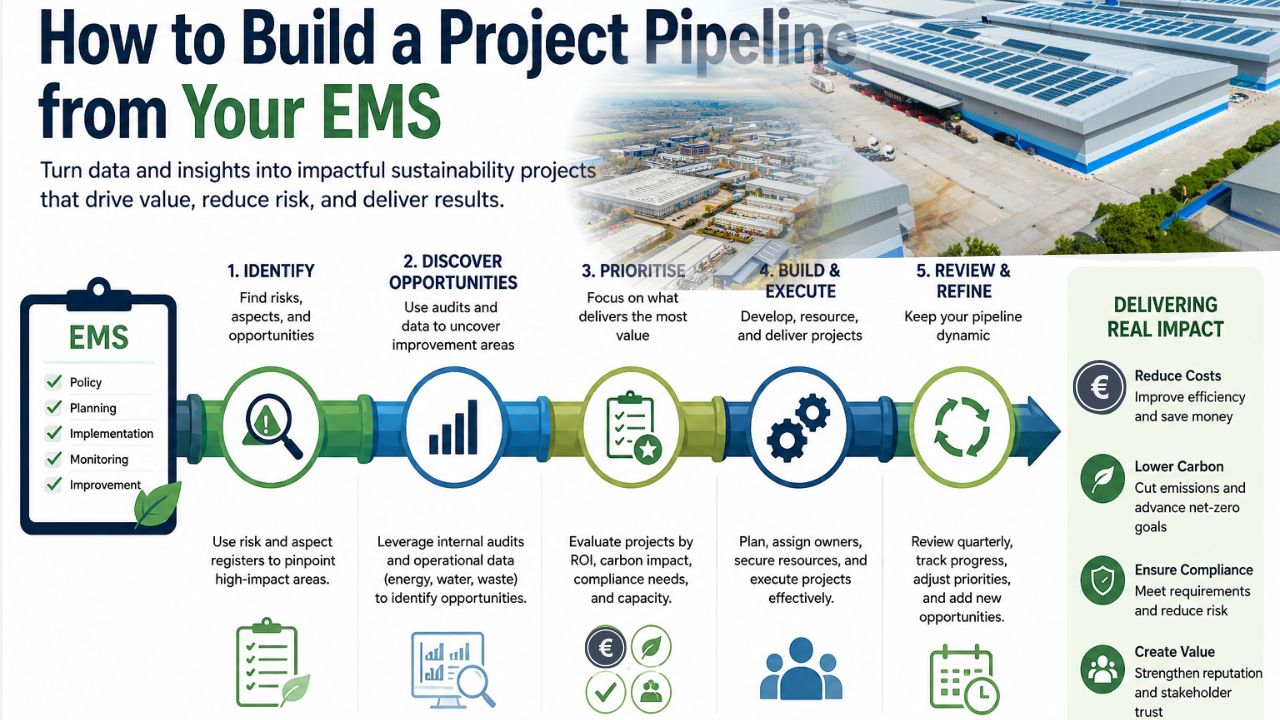
Many organisations have adopted ISO 14001 (Environmental Management Systems) and ISO 50001 (Energy Management Systems) as frameworks for continuous improvement. However, these standards are often implemented in silos, with separate teams and objectives.
The real opportunity lies in aligning these systems to address water, waste, and energy together. ISO 14001 encourages organisations to consider their significant environmental aspects, which often include water use and waste generation. ISO 50001, meanwhile, provides a structured approach to identifying and reducing energy consumption.
By integrating these standards, organisations can:
- Identify water and waste processes as significant energy users.
- Set cross-functional objectives that address multiple resource streams.
- Use data from one system (e.g., water flow meters) to inform improvements in another (e.g., pump scheduling).
- Foster a culture of holistic resource management, rather than isolated compliance.
This alignment not only streamlines audits and reporting but also uncovers synergies that might otherwise be missed.
Co-Benefits of Integrated Utility Reduction
When water, waste, and energy are managed together, the benefits multiply. Reducing water use, for example, means less energy is needed for pumping, heating, and treatment. Cutting waste at the source can reduce the need for energy-intensive processing or disposal. Optimising compressed air systems can lower both energy use and maintenance costs.
Other co-benefits include:
- Lower greenhouse gas emissions, as energy and waste reductions often go hand-in-hand.
- Improved regulatory compliance, as integrated management makes it easier to meet multiple requirements.
- Enhanced resilience, as facilities become less dependent on external utilities and more adaptable to disruptions.
- Cost savings that go beyond energy bills, including reduced water and waste disposal fees.
Practical Strategies: A Systems-Thinking Approach
So how can environmental managers and operations professionals put this holistic approach into practice? Here are some strategies grounded in systems thinking:
1. Map the Interconnections
Start by mapping out how water, waste, and energy flows interact in your facility. Identify where water is used, how waste is generated, and which processes consume the most energy. Look for points where these streams overlap—such as wastewater treatment, cooling towers, or compressed air systems.
2. Monitor and Measure
Install sub-meters and sensors to track water and energy use at key points. Use data analytics to identify patterns, spikes, and anomalies. Don’t just measure what’s easy, measure what matters, even if it means investing in new instrumentation.
3. Optimise Equipment and Controls
Upgrade pumps, compressors, and chillers to high-efficiency models. Implement variable speed drives and smart controls to match output to demand. Regularly inspect and maintain equipment to prevent leaks and losses.
4. Recover and Reuse
Explore opportunities to recover energy from waste streams, such as capturing heat from wastewater or using biogas from organic waste. Reuse water where possible, such as for cooling or irrigation, to reduce both water and energy demand.
5. Engage and Educate
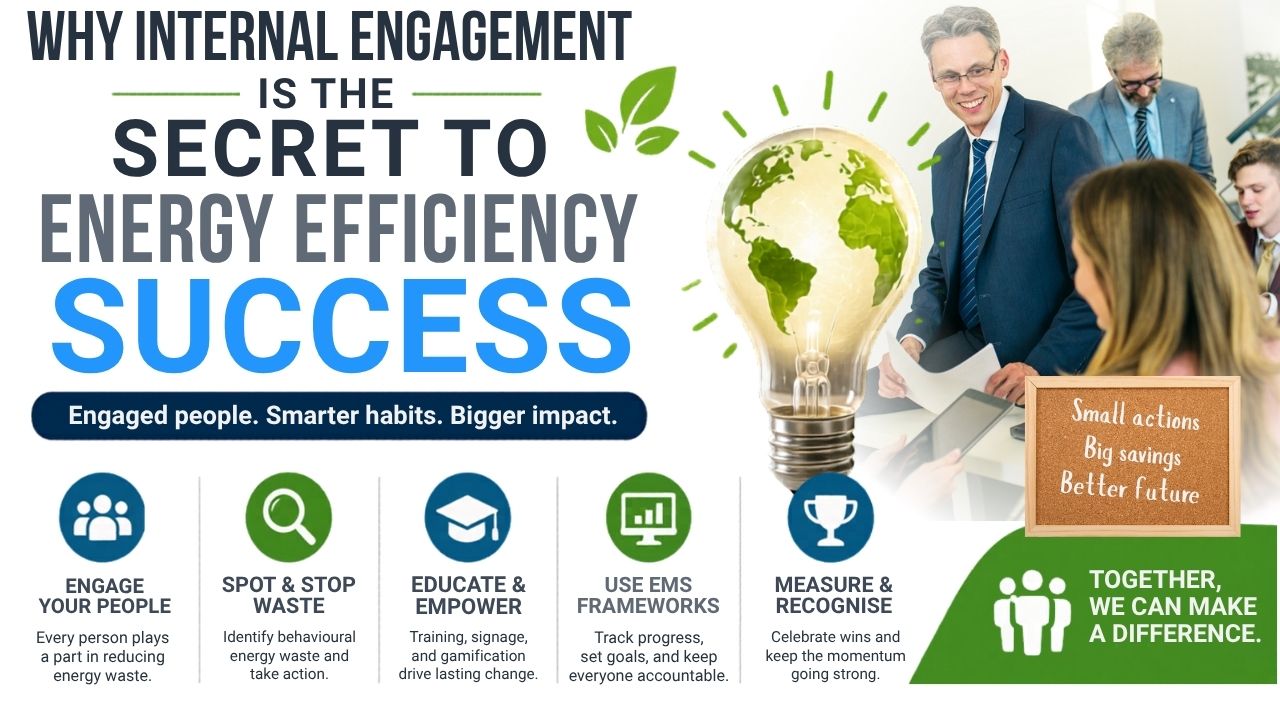
Involve staff from across departments in identifying and implementing improvements. Provide training on the links between water, waste, and energy. Celebrate successes and share lessons learned to build momentum.
6. Integrate Management Systems
Break down silos between environmental and energy management teams. Use ISO 14001 and ISO 50001 as complementary tools, not competing priorities. Set shared goals and track progress together.
Conclusion: Water and Waste Are Energy Stories Too
Reducing energy use is about more than just meters and motors. Water and waste are integral parts of the energy equation, and addressing them together unlocks greater savings, resilience, and sustainability. For environmental managers and operations professionals, the path forward is clear: adopt a systems-thinking approach, align your management systems, and recognise that every drop of water and every bit of waste is an energy story waiting to be told. For more information on integrated utility management and sustainability strategies, visit our website: TzcTZC | Improving Sustainability Through Expert Solutions
Recommended Keywords:
- water-energy nexus
- industrial energy efficiency
- ISO 14001
- ISO 50001
- integrated utility management
- water treatment energy
- waste management energy
- sustainability strategies
- systems thinking sustainability
- environmental management
- energy reduction strategies
- compressed air efficiency
- flaring reduction
- chiller optimisation
- holistic resource management