
The Role of Operational Controls in Driving Down Energy Use

Operational controls are transforming energy management by automating efficiency across HVAC, lighting, motors, and industrial processes. These systems—ranging from timers and motion sensors to variable speed drives and auto shut-off—ensure equipment runs only when needed and at optimal levels. By embedding best practices and supporting ISO 50001 compliance, operational controls deliver measurable savings, reduce CO₂ emissions, and extend equipment life. When paired with robust monitoring, they create a feedback loop for continuous improvement. For engineering and maintenance leads, investing in operational controls is essential for enforcing efficiency, reducing costs, and achieving sustainability goals around the clock.
How to Identify and Eliminate Energy Waste in Industrial Operations

Energy waste is a hidden cost in industrial operations, quietly eroding profits and sustainability goals. This guide reveals how to spot and eliminate common sources of waste—like idle machines, leaks, and oversized equipment—through practical audits and targeted improvements. Learn how to use tools such as submetering, infrared thermography, and analytics platforms to make inefficiencies visible and actionable. Discover the difference between quick wins and capital projects, and see how embedding a culture of continuous improvement empowers teams to drive lasting savings. Start turning energy waste into measurable value and boost your facility’s operational performance today.
What Makes a Great Energy Management System (EnMS)?

A great Energy Management System (EnMS) is more than just a compliance tool—it’s a strategic engine that drives cost savings, reduces emissions, and supports broader business goals. Built on strong policy, accurate data, actionable plans, and continuous review, a top-tier EnMS leverages digital tools for real-time monitoring, predictive analytics, and automation. Integration with standards like ISO 50001 ensures best practices and opens doors to financial incentives. Regularly updating your EnMS keeps it aligned with evolving business needs and technology, making it a cornerstone for sustainability and operational excellence.
Counting Carbon: Why Scope 3 Emissions Matter (Even If You Can’t Control Them)

Scope 3 emissions—those indirect emissions across your value chain—often make up the largest share of an organisation’s carbon footprint. Unlike Scope 1 and 2, which are easier to measure and control, Scope 3 covers everything from purchased goods and transportation to product use and disposal. Tackling these emissions is challenging, requiring collaboration with suppliers, robust data collection, and industry standards like the GHG Protocol. However, addressing Scope 3 is now a business imperative, as stakeholders demand greater transparency and action. By engaging your value chain and taking responsibility for all emissions, you can drive meaningful change and lead in sustainability.
Energy Audits 101: Spot Hidden Waste & Slash Consumption

Unlock hidden savings and boost your bottom line with an energy audit. In today’s industrial world, energy efficiency is essential—not just for cost control, but for sustainability too. An energy audit systematically reviews your facility’s energy use, pinpointing waste in areas like lighting, HVAC, and equipment. From quick walk-throughs to investment-grade deep dives, audits reveal actionable steps to cut consumption and improve ROI. By prioritising recommendations, setting clear goals, and engaging your team, you can turn audit insights into real results. Regular audits ensure ongoing efficiency, compliance, and a path toward a greener, more profitable future.
How to Set Effective Energy Performance Indicators (EnPIs)

Energy Performance Indicators (EnPIs) are vital for organisations striving to boost energy efficiency and achieve sustainability goals. As the backbone of ISO 50001 energy management systems, EnPIs transform raw energy data into actionable insights, enabling consistent tracking, identification of inefficiencies, and data-driven decision-making. By selecting the right types of EnPIs—absolute, relative, or specific metrics—and applying appropriate baselines and normalisation factors, organisations can ensure their energy performance is measured accurately. With the help of automation and visualisation tools, managing EnPIs becomes seamless, empowering teams to demonstrate real improvements, justify investments, and stay ahead in energy management.
The ISO 50001 Blueprint: What It Actually Takes to Build an Energy Management System
ISO 50001 is a globally recognised standard that provides a structured framework for building an effective Energy Management System (EnMS). Rather than relying on guesswork, ISO 50001 helps organisations turn energy management into a strategic, measurable process. The standard is not a quick fix or a one-size-fits-all solution; instead, it embeds energy management into everyday operations and long-term planning.
Key components of ISO 50001 include establishing a clear energy policy, defining energy performance indicators (EnPIs), conducting regular energy audits, and implementing actionable plans. Certification goes beyond compliance, offering tangible benefits such as significant cost savings, improved reputation, and a culture of continuous improvement.
However, successful implementation requires strong leadership commitment, practical processes, employee engagement, and a focus on accurate data. By following the ISO 50001 blueprint, organisations can achieve consistent savings, reduce emissions, and build a more resilient business.
Smart Energy Starts Here: Why Monitoring Is Step One in Every Sustainability Journey
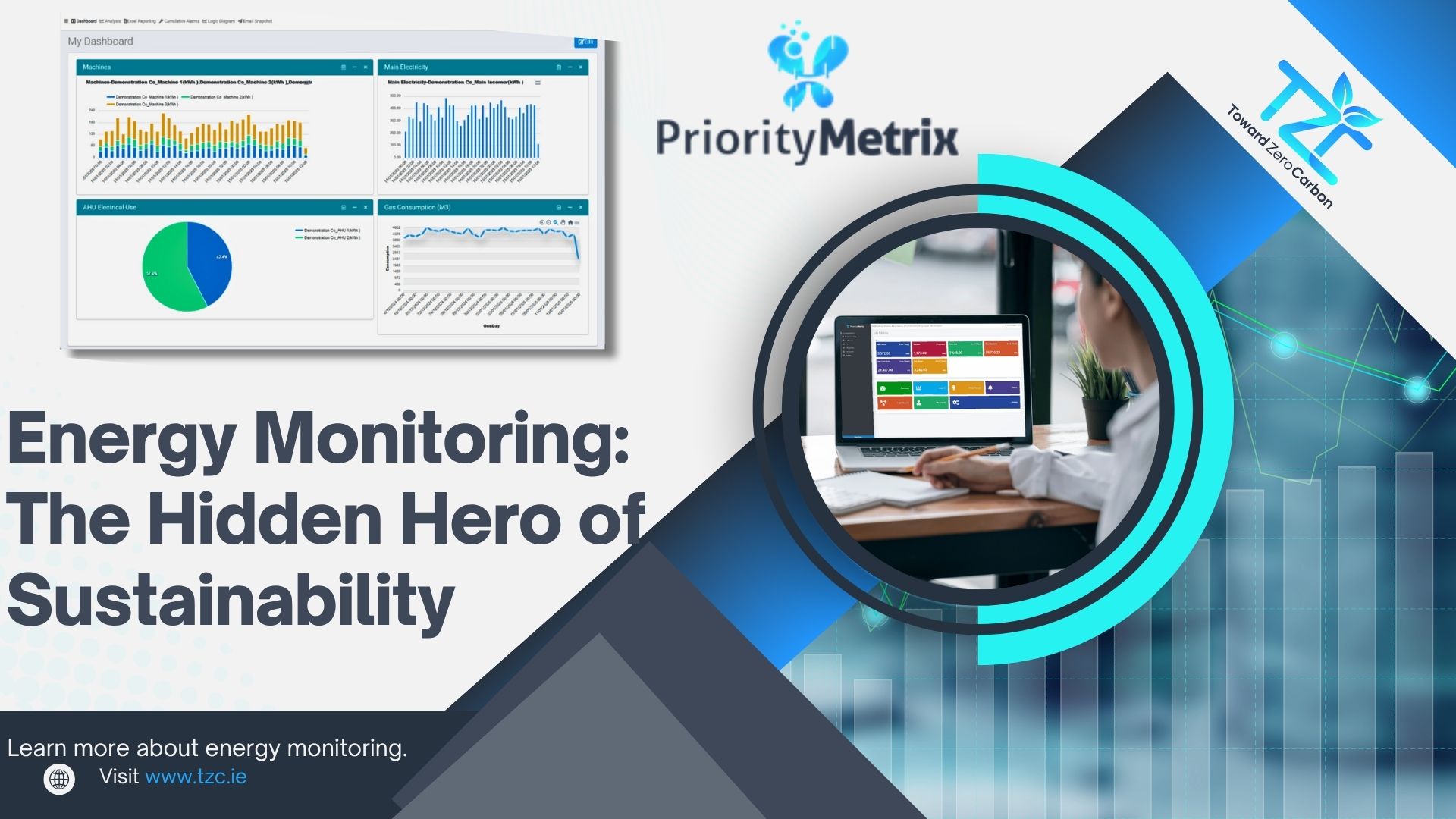
Energy monitoring is the first step in any sustainability journey. Without measuring energy use, businesses risk inefficiencies, missed savings, and falling short of carbon reduction goals. Monitoring provides the data needed to uncover waste, identify patterns, and make informed decisions. Tools like energy dashboards transform raw data into actionable insights, while automated controls optimise operations in real time. Starting small, setting clear goals, and using the right tools—like Priority Metrix—can help businesses cut costs, reduce emissions, and achieve decarbonisation targets. Ready to take control of your energy data? Let’s talk and explore your options today.